
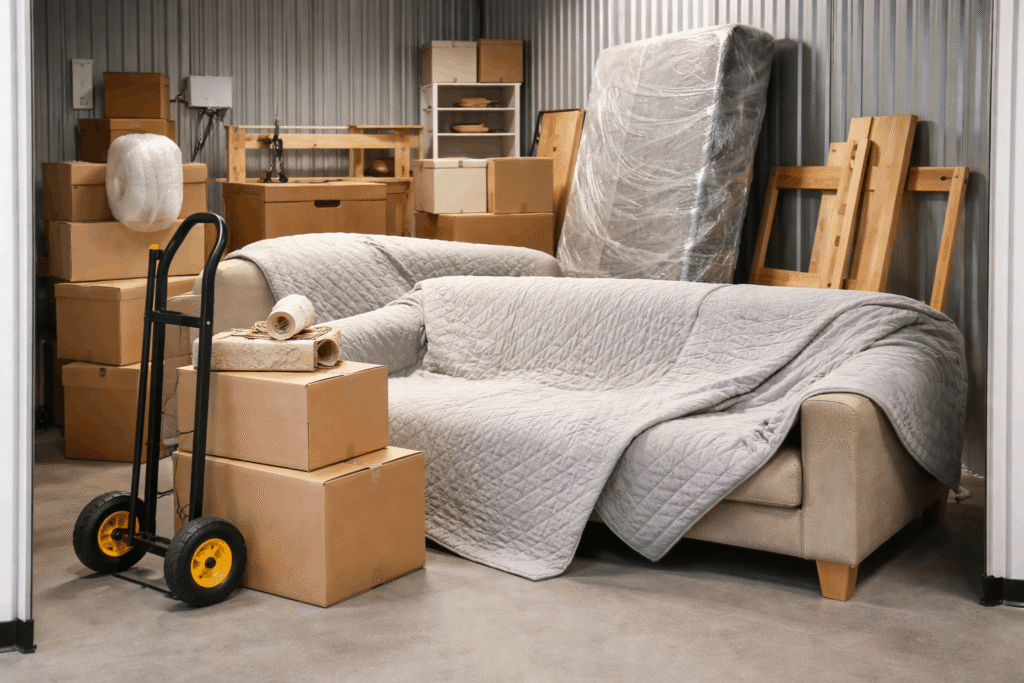
Packing furniture properly before putting it into storage is more important than many people realise. When you pack furniture the right way, it stays protected from scratches, dust, and moisture while in storage.
Storing furniture might seem simple at first. You move it into a unit, shut the door, and that is it. In reality, how you pack and store your furniture makes a big difference to how it looks when you come back to it.
Whether you are moving house, renovating, or just freeing up space, using self-storage in Nantwich can be a practical solution. But without proper packing, furniture can suffer from scratches, dampness, or general wear over time. Taking a little extra care at the start helps you avoid damage and keeps everything in good condition.
How to Pack Furniture After Cleaning It
Before anything goes into storage, give your furniture a proper clean. Dust, dirt, and moisture can cause long-term damage if left untreated.
Focus on:
- Wiping down wooden surfaces to remove dust
- Cleaning fabric sofas and chairs
- Drying everything fully before packing
- Removing crumbs or debris from drawers and corners
Clean furniture is less likely to develop mould or odours, especially if it is stored for several weeks or months.
Take Apart What You Can
Large pieces of furniture take up more space and are harder to protect if left fully assembled. If possible, take items apart before storing them.
This works well for:
- Bed frames
- Tables
- Shelving units
- Wardrobes
Keep all screws, bolts, and small parts in labelled bags and tape them securely to the main item. This saves time and avoids frustration when you need to reassemble everything later.
Use the Right Packing Materials
The materials you use can make a big difference. Avoid wrapping furniture in plastic directly, as it can trap moisture.
Instead, use:
- Furniture blankets or covers
- Bubble wrap for fragile parts
- Cardboard sheets for flat surfaces
- Breathable covers for sofas and mattresses
If you are unsure what you need, some facilities offer a box shop where you can pick up packing supplies before moving your items into storage units.
Protect Corners and Fragile Areas
Corners are the first parts of furniture to get damaged. Tables, cabinets, and wooden items can easily chip during transport or storage.
To prevent this:
- Add extra padding to the corners
- Use cardboard protectors where possible
- Wrap legs and edges carefully
- Avoid stacking heavy items on top of delicate pieces
Taking a few extra minutes here can save you from costly repairs later.
Store Furniture the Right Way
How you arrange your furniture inside the unit matters just as much as how you pack it.
Keep these tips in mind:
- Place heavier items at the bottom
- Keep lighter or fragile items on top
- Leave small gaps between items for airflow
- Avoid pushing furniture directly against walls
- Keep frequently used items near the front
Good organisation not only protects your belongings but also makes it easier to access them when needed.
Keep Upholstered Items Safe
Sofas, chairs, and mattresses need special care. Fabric can absorb moisture and smells if not stored properly.
To protect them:
- Use breathable covers instead of plastic
- Store mattresses upright if possible
- Keep soft furnishings away from the floor
- Avoid placing heavy items on top
Choosing a clean and dry facility makes a big difference here. Many people using self-storage prefer sites that are well-maintained and regularly checked to avoid damp conditions.
Think About Security as Well
Packing protects your furniture from damage, but security protects it from loss. A reliable storage facility should give you confidence that your belongings are safe at all times.
Look for features such as:
- 4K CCTV across the site
- Individually alarmed storage units
- PIN access for controlled entry
- Onsite management for added support
For example, U Storeall offers secure storage with these features in place, helping customers store furniture and personal items without worry.
Make Moving Easier on the Day
Moving furniture into storage can be physically demanding. Planning ahead helps avoid unnecessary stress.
Simple things that help:
- Use trolleys to move heavy items
- Plan your layout before loading
- Load larger items first
- Keep pathways clear inside the unit
Some facilities provide free trolley use, which can make a big difference when moving bulky furniture.
Consider Access and Flexibility
Before choosing a storage unit, think about how often you might need access to your furniture.
If you expect to visit regularly, choose a facility that offers:
- Easy access hours
- Simple entry systems
- Flexible short or long-term options
U Storeall provides both personal storage and business storage options, along with flexible terms that suit different needs. Whether you are storing furniture for a few weeks or several months, having that flexibility makes things easier.
Do Not Rush the Process
Packing furniture properly takes time, but it is worth it. Rushing often leads to missed steps, which can result in damage later on.
Give yourself enough time to:
- Clean everything properly
- Wrap items securely
- Plan your storage layout
- Move items carefully
A little patience at the start helps keep your furniture in good condition throughout its time in storage.
Final Thoughts
Storing furniture safely is not complicated, but it does require a bit of planning and care. From cleaning and wrapping to organising your storage units properly, each step plays a role in protecting your belongings.
If you are using self-storage in Nantwich, choosing a secure and well-maintained facility makes the process much easier. U Storeall offers a reliable option with secure storage, flexible terms, and helpful features that support both short and long-term needs.
If you are preparing to store furniture and want a space that is safe, clean, and easy to access, get in touch with U Storeall today and find the right unit for your needs.